Stormwater Drainage Correction
Discuss recurring runoff and drainage problems with Redline in Southern Illinois and Western Kentucky. Tell us where water collects and how the site behaves.
Explore Stormwater Drainage Correction →Southern Illinois & Western Kentucky
Water problems deserve a site-specific plan. Redline provides drainage correction, stormwater systems, culvert and catch basin installation, and erosion-control work for properties and development sites.
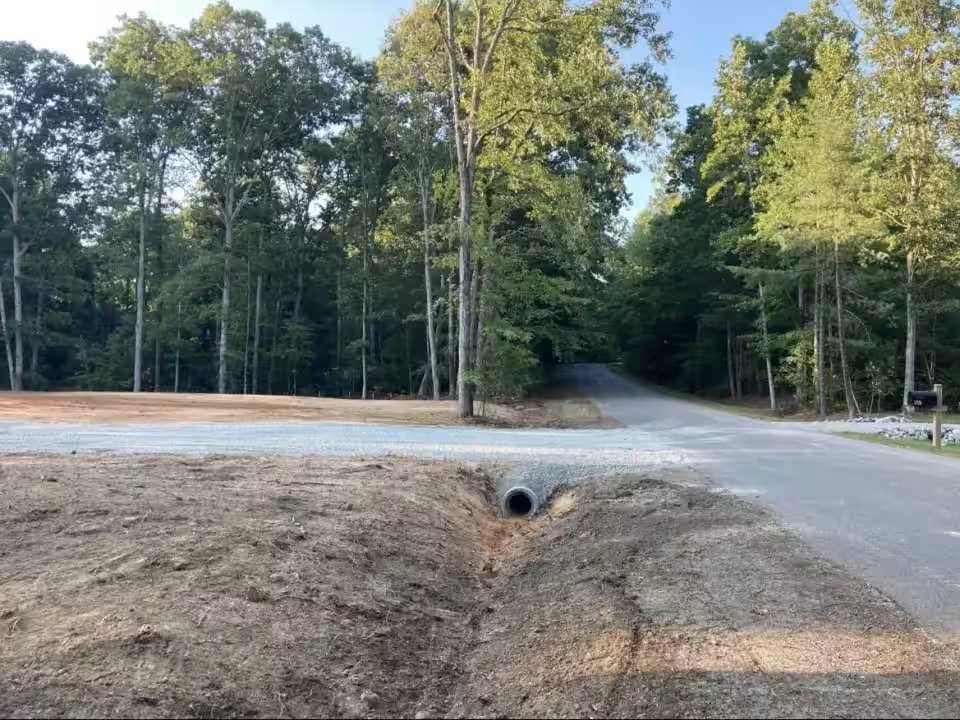
A wet spot can be the visible end of a larger drainage issue. Redline discusses where water comes from, where it collects, the surrounding grades and the intended use of the property before defining drainage work. Existing-problem correction and planned stormwater infrastructure have different needs, and both deserve a clear scope.
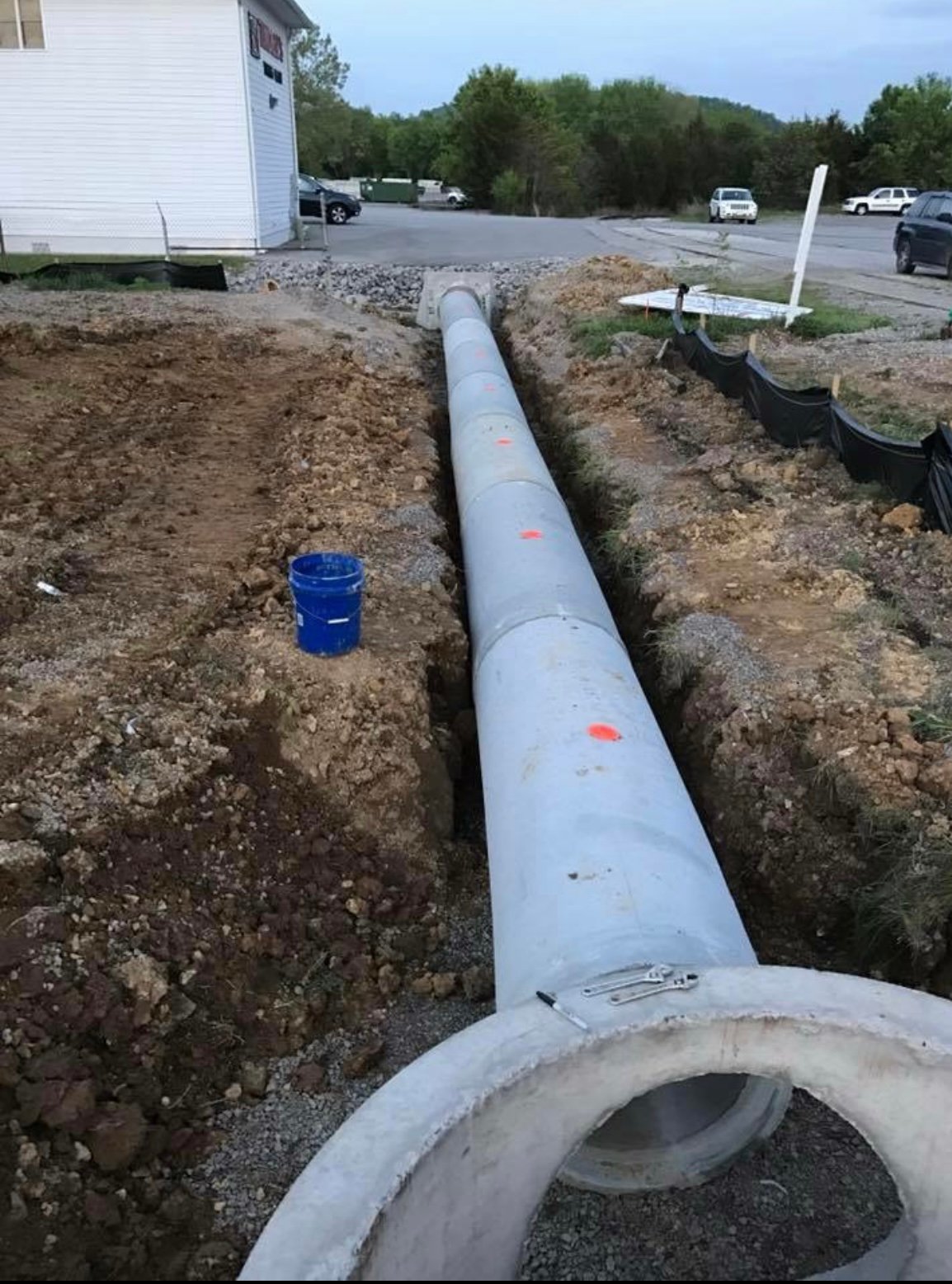

Photos taken during or shortly after rain can help explain a recurring issue. Include upstream areas, existing ditches or inlets, crossings and the place water is expected to go. If you have site plans, share them. We can then discuss the relevant grading, conveyance, collection and erosion-control work.
Useful observations include when water first appears, how long it stays, whether it arrives from another part of the property and what has changed nearby. A low yard area, a driveway crossing and runoff near a building are different problems. Recent clearing, new surfaces, filled areas or blocked drainage features can also be relevant to the discussion.
More than one element may be needed, but adding a pipe or changing a grade without reviewing the larger route can leave part of the problem unresolved. Do not assume every wet area calls for the same product or that work can discharge onto an adjoining property.
Examples include reviewing a low area that remains wet after rain, coordinating an access crossing with an existing drainage path, or considering how a new building area relates to surrounding runoff. These examples explain common planning questions; they are not completed Redline projects or guaranteed outcomes.
Work length and depth, access, the existing surface, utilities, materials, outlet conditions, soil and water conditions, disposal and restoration all influence the work. Replacing a driveway surface or landscaping may be separate from installing the drainage feature. Ask for those boundaries to be stated in the estimate.
Will regrading always solve standing water?
No. The cause may involve the water route, soil, an outlet or an existing feature as well as surface levels. Start with assessment rather than a promised universal fix.
Should I wait until the ground is dry to send photos?
Photos showing the water pattern can be helpful. Include views of the surrounding ground and tell us when they were taken; do not enter an unsafe area to obtain them.
Can a new drain simply end at the property line?
The proposed destination needs review. Property boundaries alone do not establish a suitable outlet or resolve effects on neighboring land.
Is landscaping restoration included?
Only if it is part of the agreed scope. Clarify the expected soil, stone, surface or planting finish around the work.
Will a drainage feature need maintenance?
Discuss access for inspection and how debris, sediment or damage should be handled for the particular feature. Include any ongoing service separately in the scope.
Request a drainage assessment or explore Precision Grading for related ground-shaping work.
Planning guidance: Why Standing Water Keeps Coming Back After Rain.
Discuss recurring runoff and drainage problems with Redline in Southern Illinois and Western Kentucky. Tell us where water collects and how the site behaves.
Explore Stormwater Drainage Correction →Discuss stormwater systems and drainage utilities with Redline in Southern Illinois and Western Kentucky. Share your site plans, drainage needs and project scope.
Explore Stormwater Management Systems & Drainage Utilities →Discuss culvert installation with Redline Siteworks in Southern Illinois and Western Kentucky. Share your crossing, access, water-flow and site requirements.
Explore Culvert Installation →Discuss erosion control with Redline Siteworks in Southern Illinois and Western Kentucky. Share your slopes, runoff concerns and residential or commercial site needs.
Explore Erosion Control →Discuss rip rap installation with Redline Siteworks in Southern Illinois and Western Kentucky. Share the area, access and runoff or erosion concerns.
Explore Rip Rap Installation →Discuss catch basin installation with Redline Siteworks in Southern Illinois and Western Kentucky. Share collection points, site grades and drainage plans.
Explore Catch Basin Installation →Silt fencing is one available sediment-control measure. Discuss the project limits, plans and site conditions as part of a broader erosion-control scope.
Redline stands behind its workmanship. Warranty coverage is determined for each project, and warrantied and non-warrantied scopes are identified in the written estimate/invoice documentation. You should understand those terms before the work begins.
We serve residential, landowner, agricultural and commercial customers across Southern Illinois and Western Kentucky. Tell us your project location and the work you have in mind.
Tell us where the work is, what you want to accomplish and any site details that will help us understand the scope.
Prefer to call? 270-556-0757