Southern Illinois & Western Kentucky
Erosion Control
Discuss erosion control with Redline Siteworks in Southern Illinois and Western Kentucky. Share your slopes, runoff concerns and residential or commercial site needs.
- 12 yearsIndustry experience
- Illinois & KentuckyServing both states
- OSHA Certified
- Clear written termsJob-specific warranty coverage
Address the soil and runoff relationship
Erosion control concerns how exposed ground, slopes and moving water interact within the project area. Redline offers erosion-control work for residential, landowner, agricultural and commercial customers. Commercial projects link to this same detailed service page so the scope stays clear and consistent.
Project photos
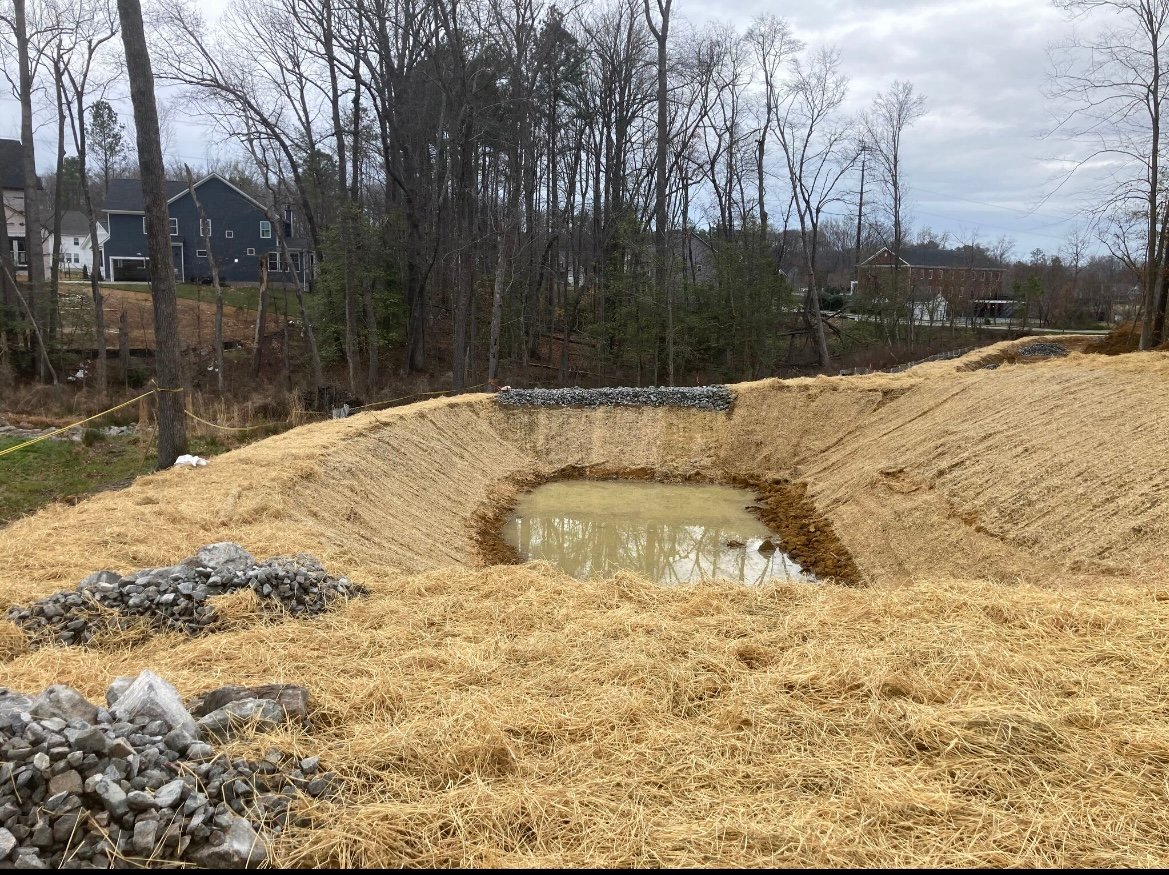
Work around the project’s actual conditions
Tell us where soil loss or sediment movement is occurring, when you notice it and what is happening uphill or nearby. For a planned project, share the relevant drawings, work limits and proposed sequence. Useful control measures depend on the location and the job requirements.
Define the measures and responsibilities
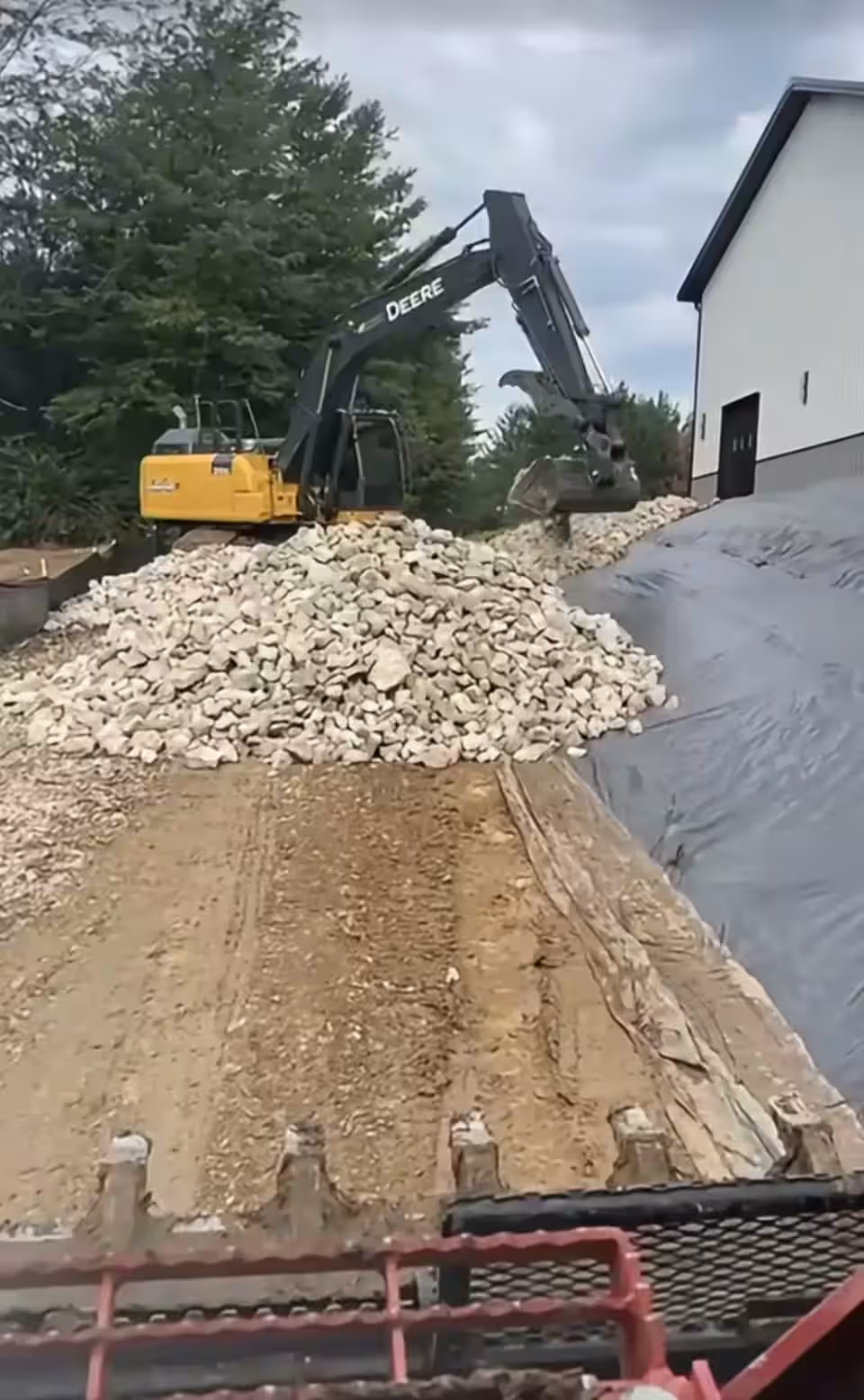
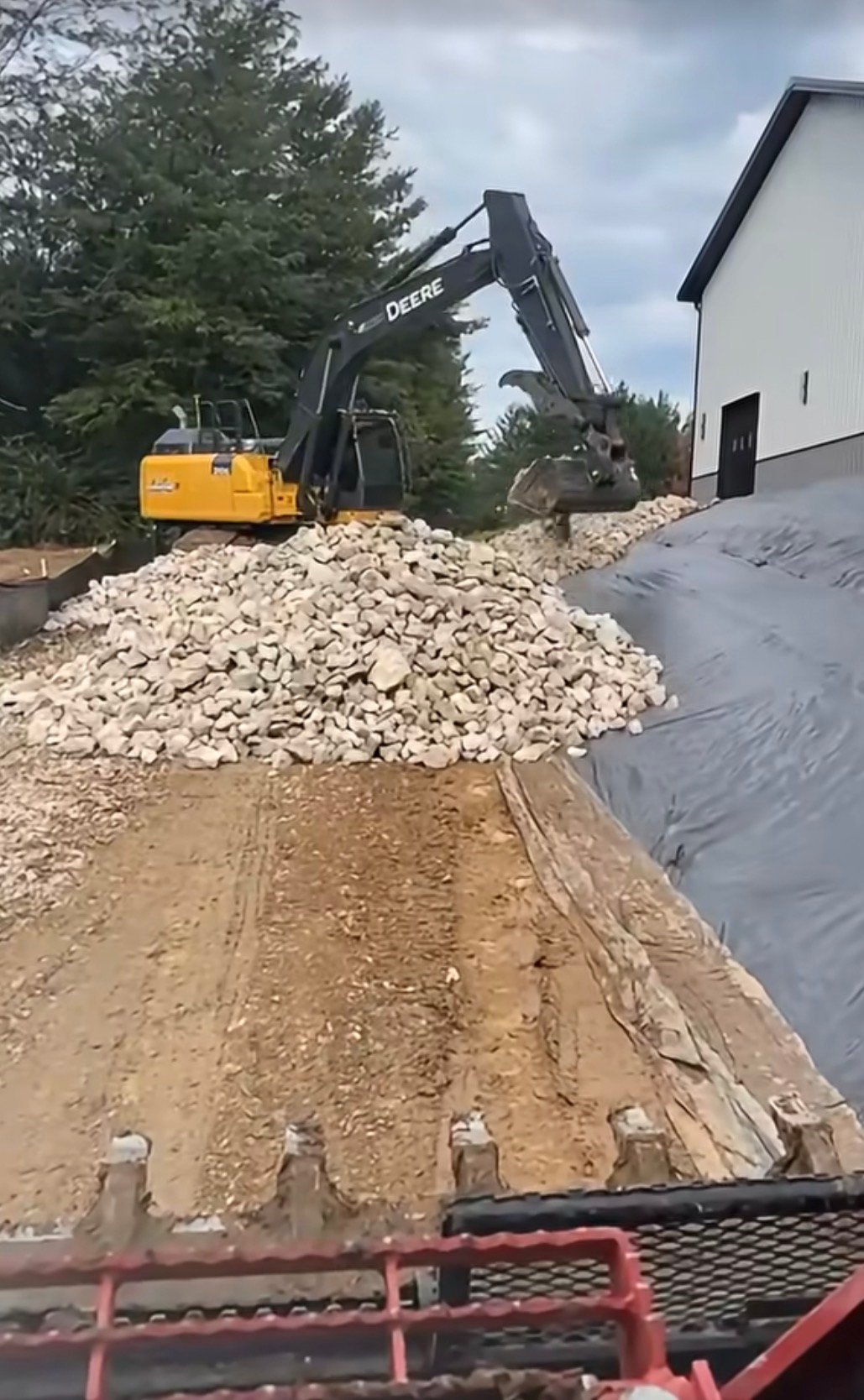
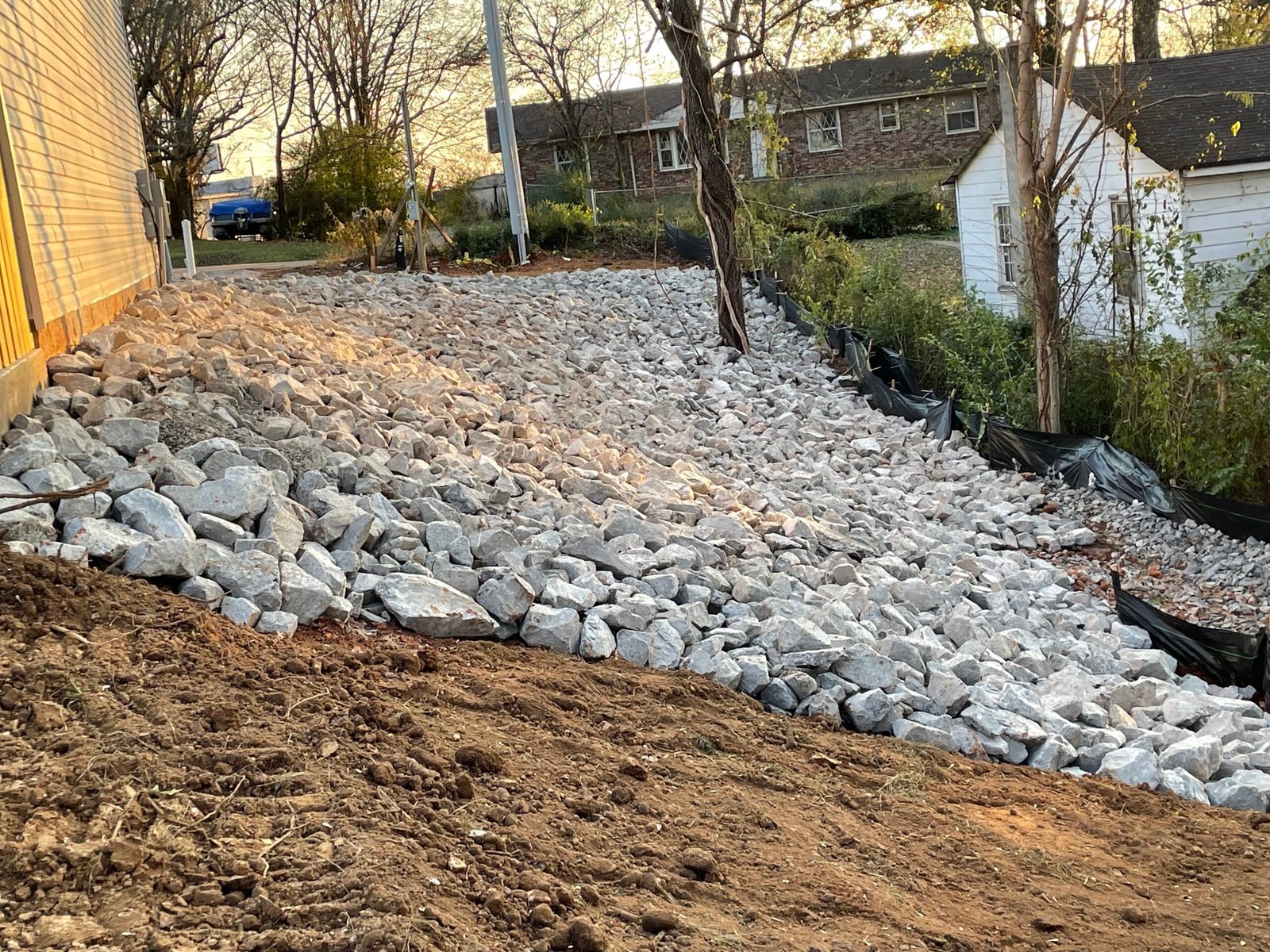
The written scope should identify the proposed work, its location and any related project requirements. Access, nearby drainage features and other sitework can influence the plan. Redline’s advertised drainage capabilities include rip rap installation and silt fencing, which can be discussed in their appropriate project context.
Start with where the soil is moving
Describe the affected area and what you see after rain: channels forming in exposed soil, sediment collecting downhill, a worn path beside an access road, or material leaving a recently disturbed area. Include observations about water arriving from outside the work area. Treating only the visible low point may overlook the source of the problem.
Temporary control and lasting stabilization serve different purposes
Temporary controls can be part of managing a disturbed area during work. A permanent finish needs to suit the ground, runoff and intended use after construction. The plan should identify what is temporary, what remains, and who is responsible for inspection, maintenance and any later removal.
Erosion control also differs from drainage correction. One addresses soil movement and protection of disturbed areas; the other may change how water is collected or conveyed. Grading, drainage and surface protection may need to be coordinated. A single material should not be presented as a universal answer for every slope or flow condition.
Illustrative situations
Examples include planning protection for a freshly graded area, reviewing soil loss near a driveway outlet, or coordinating erosion measures with a phased clearing project. These describe possible project needs, not completed Redline work. The appropriate measures depend on the site and any project requirements.
Planning installation and the follow-up responsibilities
- Document the concern. Provide the location, photos, the affected limits and when the movement occurs.
- Review the surrounding site. Discuss slopes, runoff paths, drainage features, access and planned construction.
- Define the measures. Identify the proposed locations, materials, work limits and relationship to the site plan.
- Coordinate the sequence. Determine what is needed before disturbance and how the work relates to grading or drainage improvements.
- Agree the handoff and upkeep. State who monitors the measures, addresses damage and handles any later removal or permanent finish.
What affects an estimate?
The length or area needing work, slope and access, runoff conditions, selected measures, material delivery, preparation and the relationship to other earthwork influence the scope. Maintenance or later visits should be identified separately rather than assumed to be included in an installation price.
Erosion-control questions
Should I request drainage work or erosion control?
Describe the symptoms rather than trying to select a product first. Moving soil and poorly directed water can occur together and may need related scopes.
Will adding rock solve every erosion problem?
No. The source and path of water, ground conditions and the proposed location matter. The selected approach needs to suit the site.
Are temporary measures maintenance-free?
Do not assume so. Agree who checks them, what maintenance is included and how any damage or changing condition is reported.
Can erosion work be coordinated with grading?
Include both needs in the project discussion so the sequence and final finish can be defined together.
What should I send with an inquiry?
Photos of the affected ground and the area above it, the location, recent changes on the site and any relevant drawings. Discuss your erosion-control project.
Related services
See Rip Rap Installation and Silt Fencing. For the larger construction scope, explore Commercial Site Development or Precision Grading.
Experience, communication and a clear scope
Redline Siteworks is built on 12 years of experience in excavation, site development and civil construction. Our owner is OSHA Certified and Project Management Certified. We plan each job around the actual site and communicate the proposed work in clear terms.
Warranty coverage is job-specific. Warrantied and non-warrantied scopes are identified in the written estimate/invoice documentation before work begins.
Tell us about your erosion control project.
Tell us where the work is, what you want to accomplish and any site details that will help us understand the scope.
Prefer to call? 270-556-0757