Lot Clearing
Prepare your lot with Redline Siteworks in Southern Illinois and Western Kentucky. Discuss vegetation, access, areas to retain and your plans for the property.
Explore Lot Clearing →Southern Illinois & Western Kentucky
Make room for the next use of your land. Redline provides lot clearing, forestry mulching, grubbing and land reclamation for homes, working properties and commercial development.
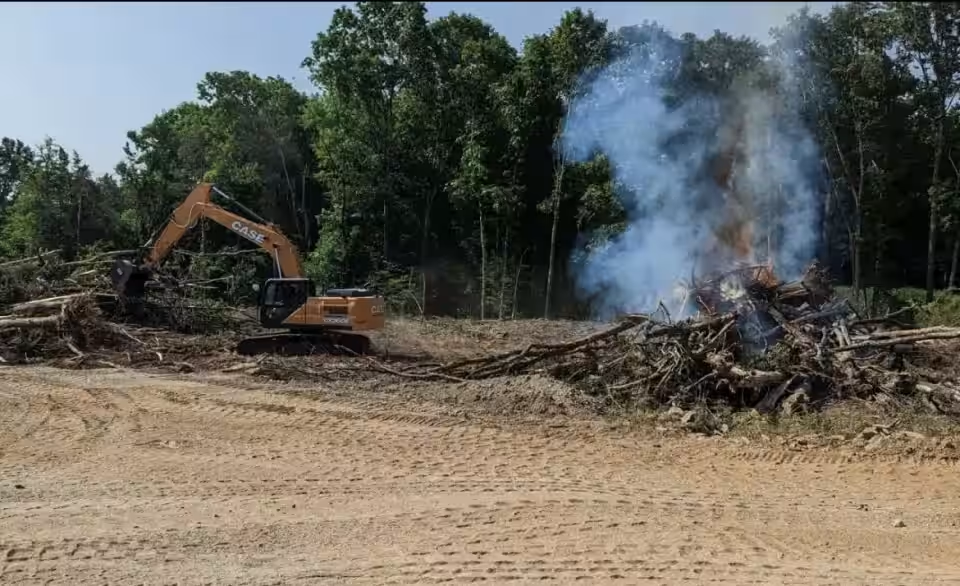
The useful starting point is not simply how much vegetation is on the property. It is what you want the land to become and what needs to remain. Redline helps homeowners, landowners, agricultural customers and commercial clients discuss clearing limits, access and the relationship between vegetation removal and the next stage of sitework.

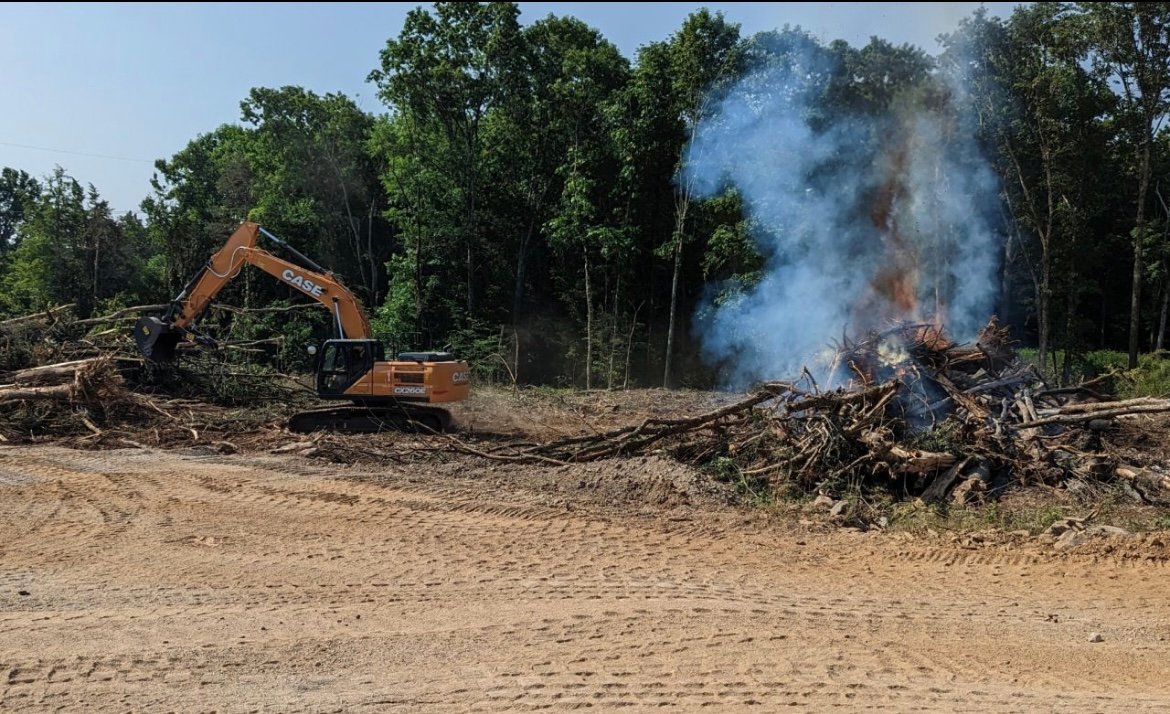
Point out trees or areas to retain, property boundaries, existing structures and the route into the work area. Tell us whether the next use is a building, access route, maintained open space or another purpose. Grubbing and surface vegetation management are different scopes; the written estimate should make the selected work clear.
Opening a route through brush, preparing a house site and reclaiming overgrown property can require different work. Describe the finished condition you want: visible access, ground ready for a following earthwork phase, or an area you can maintain. Mark the limits and the vegetation that should remain before the work is priced.
For a future building or driveway, explain the proposed footprint and route at the start. Surface appearance alone does not establish that an area is ready to support construction.
Planning examples include opening an overgrown access corridor while retaining shade trees, clearing a defined building footprint before earthwork, or managing brush around a maintained area. These are illustrative situations, not completed-project claims. The method and finish depend on actual vegetation, terrain and the next use.
Vegetation density and size, stump removal, terrain, access, nearby features, material handling and the requested finish can matter as much as area. A mostly open acre and a densely wooded acre are different scopes. Photos and a marked plan help explain those differences; a property description alone may not show them.
Can selected trees stay?
Identify the retained areas and individual trees during planning. Discuss access and the space needed around them before choosing the work limits.
Does clearing automatically include stump removal?
No assumption should be made. Ask for stump and root work to be stated explicitly in the estimate.
Is mulching the same as preparing a building pad?
No. Mulching addresses vegetation; construction readiness may require grubbing, excavation, suitable material, grading and project-specific acceptance.
Will all debris leave the property?
The material-handling plan should say what is retained, processed or hauled away. Confirm that finish rather than relying on the word “clearing.”
What should I provide first?
Your location, photos, approximate limits, areas to retain and the intended use. Request a land-clearing estimate.
Continue planning with Site Preparation and Precision Grading.
Prepare your lot with Redline Siteworks in Southern Illinois and Western Kentucky. Discuss vegetation, access, areas to retain and your plans for the property.
Explore Lot Clearing →Discuss forestry mulching with Redline Siteworks in Southern Illinois and Western Kentucky. Tell us about vegetation, terrain, access and property goals.
Explore Forestry Mulching →Discuss land reclamation with Redline Siteworks in Southern Illinois and Western Kentucky. Share the current condition and intended use of your property.
Explore Land Reclamation →Clearing across a larger work area for the next use of the land. Define the clearing boundary, areas to retain and the relationship to grading or commercial development.
Address roots, stumps and below-surface vegetation within the agreed work area. Discuss what will be built or used afterward so grubbing is coordinated with site preparation.
Bring brush removal and property cleanup into one clear plan. Identify the vegetation, affected areas and material to be addressed, while distinguishing land cleanup from a separate demolition scope.
Redline stands behind its workmanship. Warranty coverage is determined for each project, and warrantied and non-warrantied scopes are identified in the written estimate/invoice documentation. You should understand those terms before the work begins.
We serve residential, landowner, agricultural and commercial customers across Southern Illinois and Western Kentucky. Tell us your project location and the work you have in mind.
Tell us where the work is, what you want to accomplish and any site details that will help us understand the scope.
Prefer to call? 270-556-0757