
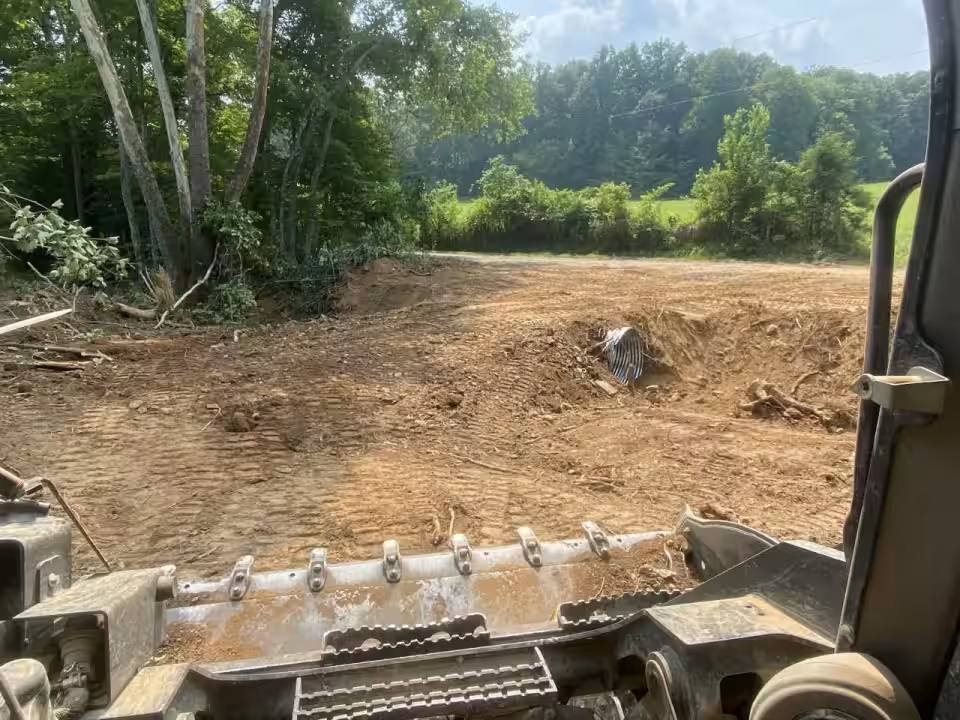
A small puddle after a hard storm is not always a concern. But if water stays for a long time, returns in the same spot, or moves toward a building or high-use area, it is worth a closer look. Yard drainage problems can leave grass thin, create mud, and make areas around patios, driveways, gardens, barns, and outbuildings harder to use.
Watch Where Water Collects After Rain
Early fall rain often makes drainage patterns easier to spot. After drier summer weeks, September showers can reveal low areas that were easy to miss. Falling leaves and changing weather can also slow water that once moved through a ditch, swale, or drainage channel without trouble.
We recommend paying attention soon after rainfall, rather than waiting until the ground has dried. Notice where water enters your yard, where it settles, and whether it is moving toward a structure. The length of time the area stays wet matters, too.
Common places to watch include:
- Along the foundation of a house, barn, garage, or outbuilding
- Beside a driveway, sidewalk, patio, or fence line
- At the bottom of a slope or in a sunken lawn area
- Near downspouts, culverts, ditches, and drainage channels
Seeing the whole pattern is more useful than focusing only on the visible puddle. Water may collect in one corner of the yard, while the source is uphill, along a roofline, or beside a hard surface that sheds runoff quickly.
Poor Grading Sends Water to Low Areas
Grading is the shape and slope of the ground. It guides rainwater across a property. When the surface slopes toward a low spot, a driveway, a backyard, or a building, water can repeatedly follow that same path and settle where it should not.
Even small changes in elevation can create recurring wet spots. Soil can settle after construction. Landscaping work may change the surface level. Equipment, vehicles, livestock, and regular foot traffic can press down the ground and create shallow depressions over time. Once rain finds that lower route, it often keeps using it.
When we look at yard drainage problems, we consider the direction water takes from one part of the site to another. Adding material to a puddle without understanding that flow may only move the water to a nearby area. A lasting approach starts with identifying why water is arriving there in the first place.
Soil and Hard Surfaces Can Slow Drainage
Not every drainage issue is caused by an obvious slope. Soil conditions can make a major difference. Dense or clay-heavy ground may absorb water slowly, and compacted areas may resist water even more. Parking areas, equipment routes, animal traffic zones, and busy outdoor spaces often develop compacted soil that leaves water sitting on top.
Hard surfaces add another layer to the problem. Roofs, patios, sidewalks, driveways, and outbuildings do not absorb rainfall. Instead, they send it quickly toward the surrounding ground. A downspout that empties near a foundation or low spot can add a large amount of water to one small area during a storm.
We encourage property owners to think beyond the wet patch itself. Surface runoff and what is happening below ground work together. The puddle may be in the lawn, but the cause could involve water leaving a roof, rolling down a neighboring slope, or crossing a packed access path before it reaches that lawn.
Blocked Drainage Paths Hold Water in Place
A property may already have features meant to move water away, such as swales, ditches, culverts, catch basins, channels, or downspout extensions. These features need a clear route and enough capacity to carry runoff away from problem areas. If they are blocked, damaged, too shallow, or poorly placed, water can back up and spread across the yard.
Fall can bring extra debris into those paths. Leaves, grass clippings, sediment, and washed-in soil may reduce flow before heavier seasonal rain arrives. A drainage route that seemed adequate earlier in the year can become less effective when debris builds up.
Signs that a drainage path may need professional attention include:
- Water backing up near a culvert or drainage opening
- Runoff overflowing a ditch or swale
- Pooling around a downspout instead of moving away
- Water crossing a driveway rather than following its intended route
- Repeated mud or washout near the same channel
These signs may point to more than a simple clog. In some cases, the full drainage layout needs to be considered so water has a dependable path from the collection area to an appropriate outlet.
Fall Rains Can Reveal Hidden Problems
Autumn is a practical time to observe how your property handles rain. Cooler weather and regular rainfall can make the natural flow of water easier to see before winter conditions arrive. We suggest documenting wet areas during or shortly after a storm, especially if the problem keeps returning.
Photos can help show where runoff begins, how it travels, and where it stops. It also helps to note whether the water reaches a structure, crosses a driveway, affects an access area, or leaves the soil saturated long after the rain ends. Those details give a clearer picture of the issue than a dry-day inspection alone.
Across Southern Illinois and Western Kentucky, no two properties drain exactly the same way. Residential yards, agricultural land, and commercial sites can have different terrain, soil, building placement, traffic patterns, and drainage outlets. We consider those site conditions when reviewing whether grading, drainage improvements, excavation, or another land solution may fit the problem.
A Drier Yard Starts with Water Flow
Standing water keeps returning when the reason behind it remains in place. Poor grading, compacted soil, concentrated roof runoff, blocked drainage routes, and low areas can all keep water from moving where it needs to go. Treating only the puddle often misses the larger pattern.
The best practical takeaway is to watch water during rain, not just after it is gone. Once you know where it starts, where it travels, and how long it remains, a professional site review can help identify an approach that addresses the cause instead of the next puddle.
Protect Your Yard From Recurring Water Issues
Redline Siteworks can assess the conditions contributing to persistent pooling and recommend practical next steps for your property. Get professional help with yard drainage problems that affect your lawn, landscaping, and outdoor use. When you are ready to discuss your project, contact us to get started.