Southern Illinois & Western Kentucky
Commercial Clearing & Grubbing
Open the work area before grading and construction start. Redline clears commercial sites to agreed limits. We review trees to keep, stumps to remove and how brush and debris will be handled.
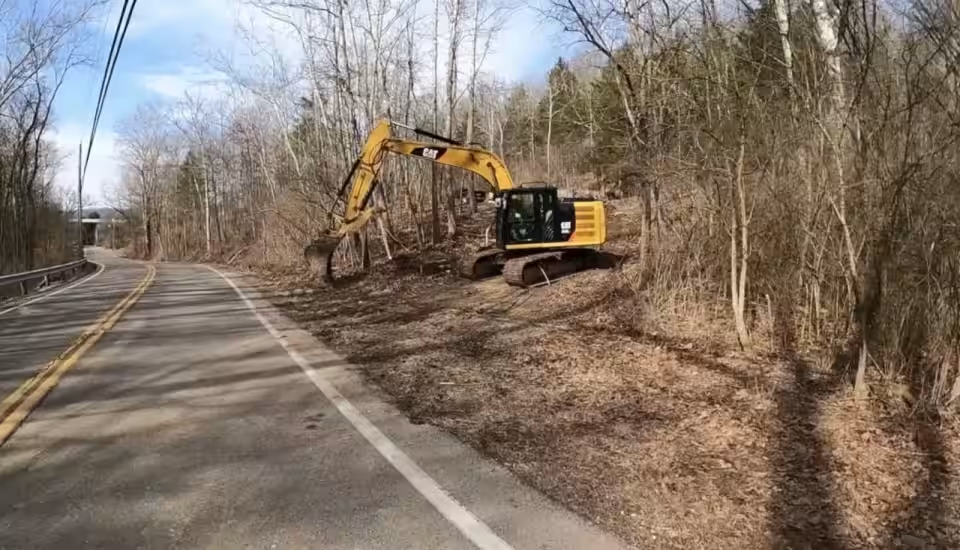
Clearing, grubbing and mulching serve different needs
Clearing removes vegetation from the work area. Grubbing removes stumps and roots where the plans call for it. Forestry mulching breaks down vegetation but does not leave the same ground condition as full stump and root removal.
Choose the method to fit the next use of the land. A building pad, access road and planted area may each need different work. Mark those areas before equipment arrives.
Project photos
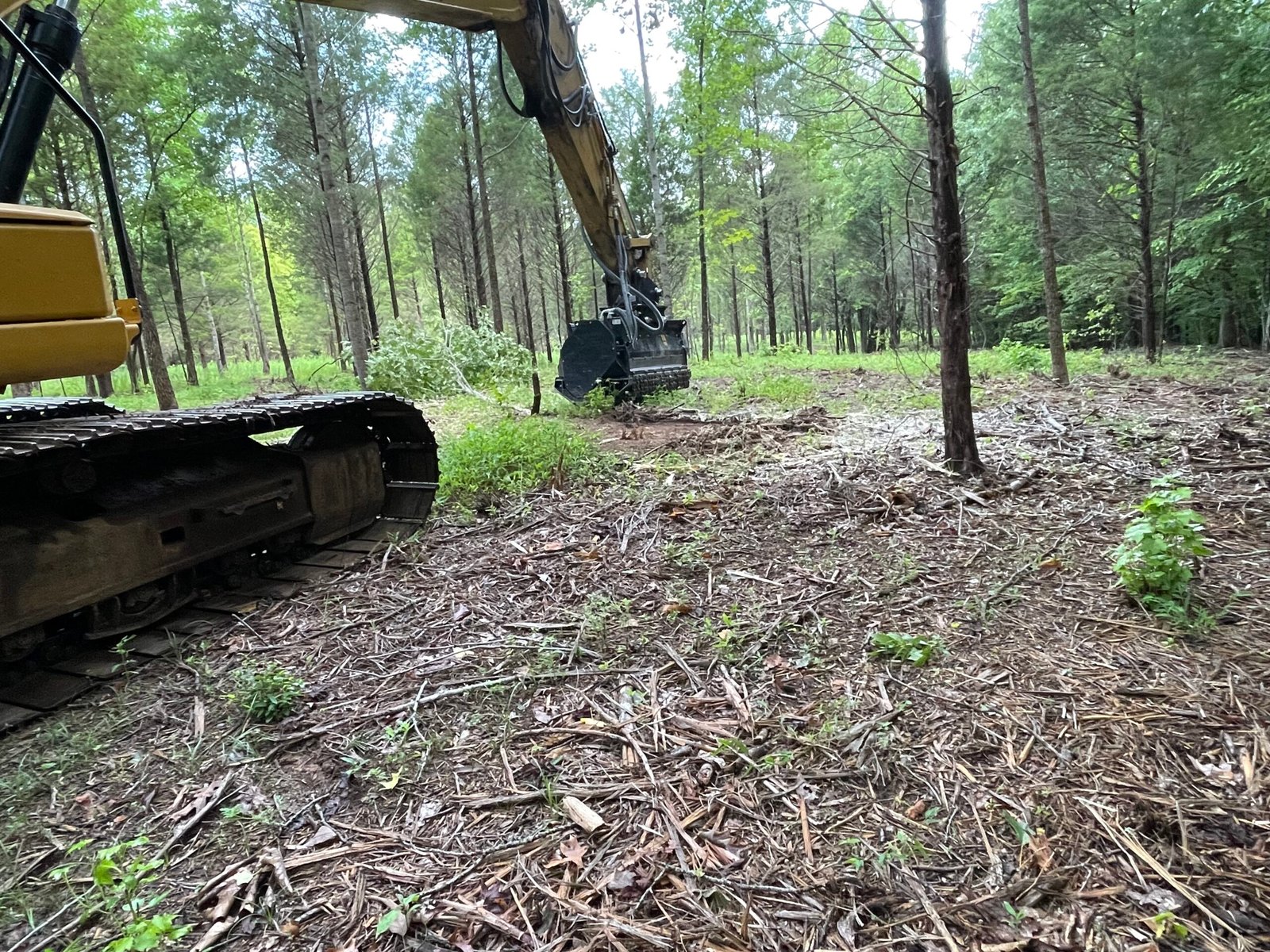
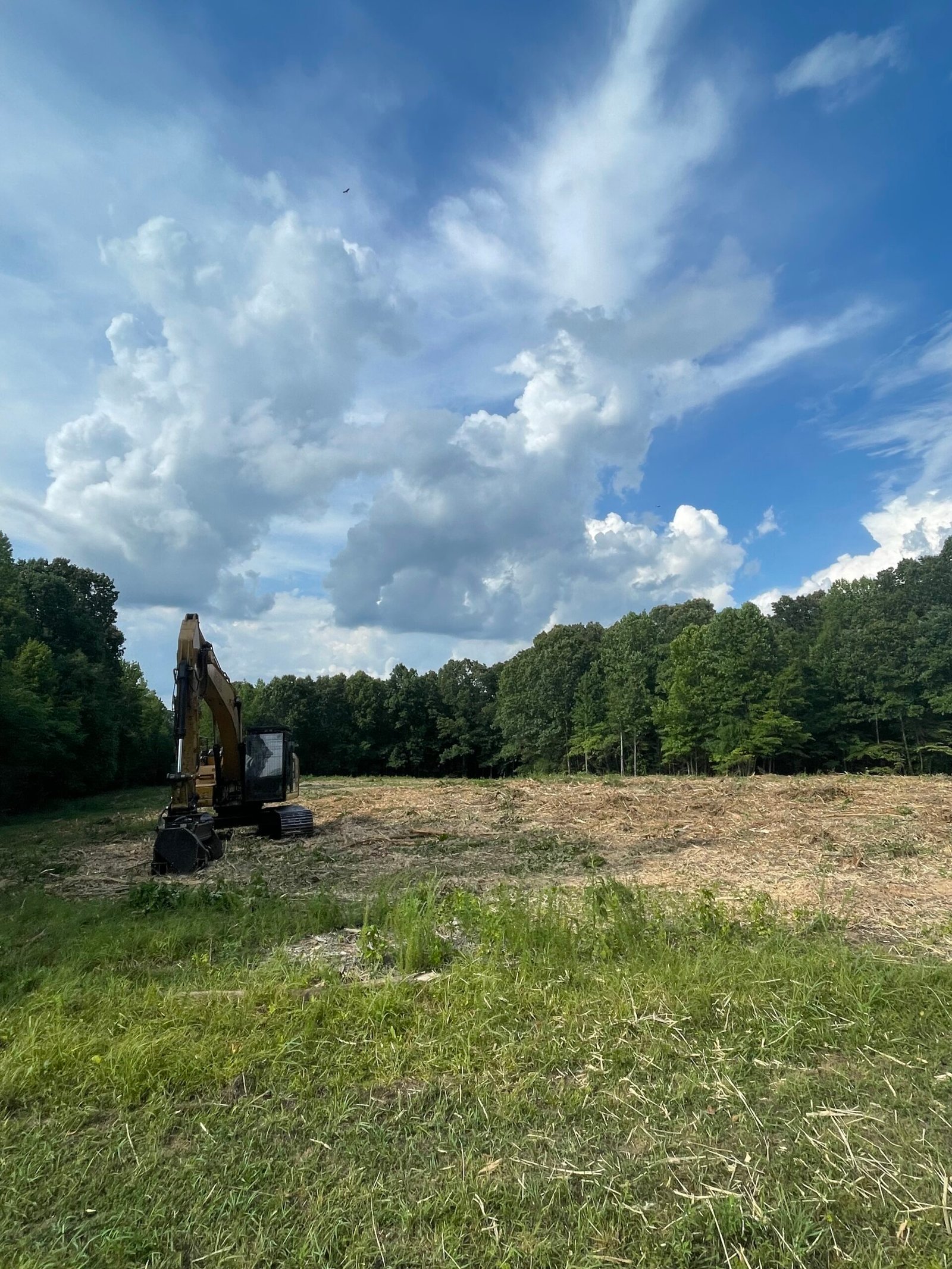
Define the limits and protect what remains
Send a plan showing the clearing limits, access and trees to keep. Mark nearby buildings and places where removed material may be stored. The work limits must be clear both on the plan and on site.
Tell us whether you need to open a building area, an access route or another part of the property. Clearing limits may differ from property lines. The project team should identify any drainage features, protected areas or permit limits that affect the work.
Plan the handoff to earthwork
- Set the goal: identify the areas that need clearing, grubbing or another treatment.
- Review the site: check trees, access, slopes, known utilities and features to keep.
- Plan debris handling: agree what will be processed, stored or hauled away.
- Set the sequence: coordinate clearing with the next digging or grading phase.
- Check the finish: review work limits, remaining debris and the ground condition needed next.
Clearing alone does not make a finished building pad. Soil preparation, grading and testing need their own agreed scope.
What affects pricing and timing
Price depends on area, brush density, tree and stump size, slope and access. Wet soil and debris-handling needs can also affect the job. Share plans that show trees to keep and the required ground treatment.
Hauling material away is different from processing or storing it on site. Agree the outcome before work starts. Weather and the next trade’s schedule can affect when each area is ready.
Clearing and grubbing questions
Is stump removal included in clearing?
Only when it is in the scope. State where grubbing is needed and the finish required.
Can trees be kept?
Mark the trees and other features to keep before the estimate. Share any protection requirements from the project designer or tree specialist.
Does mulching prepare a building pad?
No. Roots, organic material, soil and grades need separate review before a pad is built.
Is debris removal included?
Check the written scope. Processing, storage, loading, haul-off and disposal are separate tasks.
What follows clearing?
It may be excavation, grading or another planned phase. Agree what the next trade needs before clearing begins.
Coordinate related sitework
Explore Site Development, Precision Grading, Utilities, Demolition.
Return to Commercial services or review Southern Illinois and Western Kentucky service areas.
Related work: Lot clearing, Forestry mulching.
Discuss your commercial project
Send the project location, current plans, requested scope, site-access information and target sequence. Identify the work you want priced and any responsibilities assigned to other parties.
Prefer to call? 270-556-0757